|
|
|
|
2 prints remain |
|
2 prints remain |
|
|
|
|
2 prints remain |
|
2 prints remain |
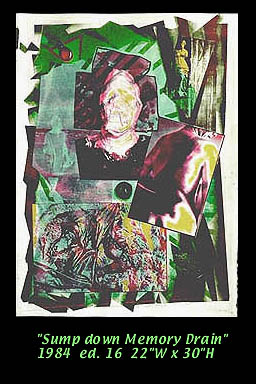
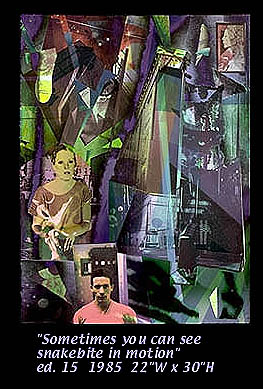
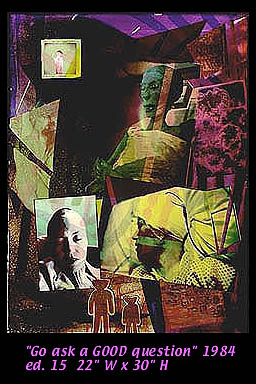
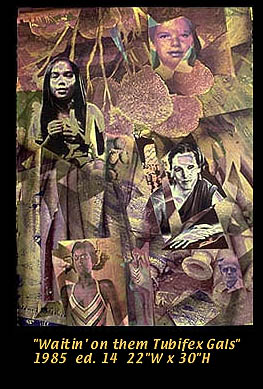
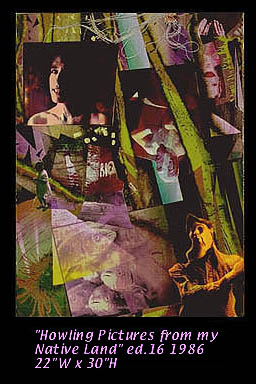
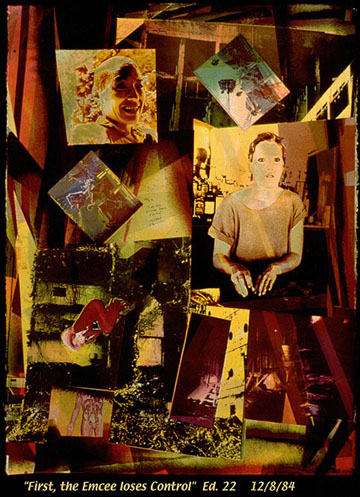
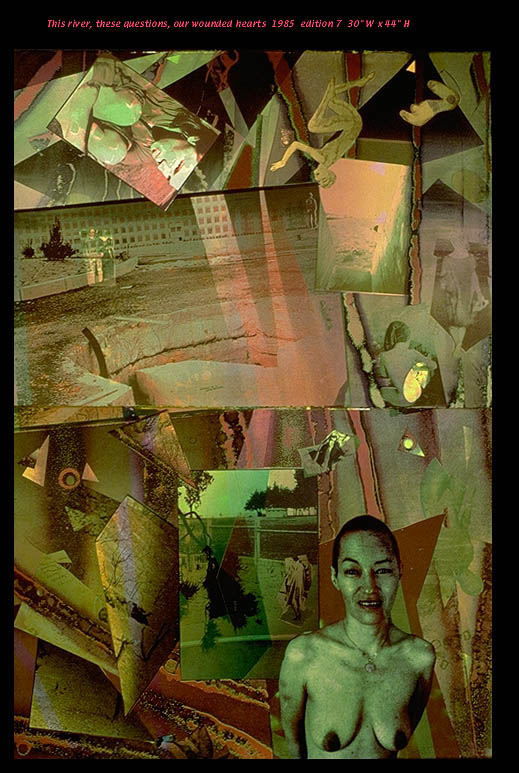
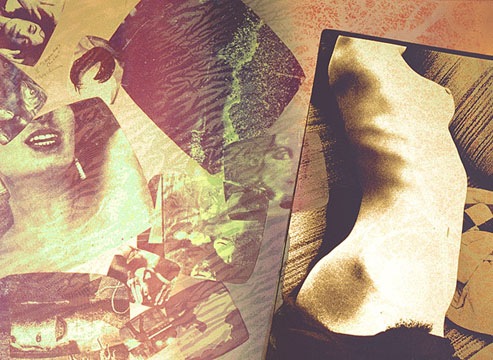
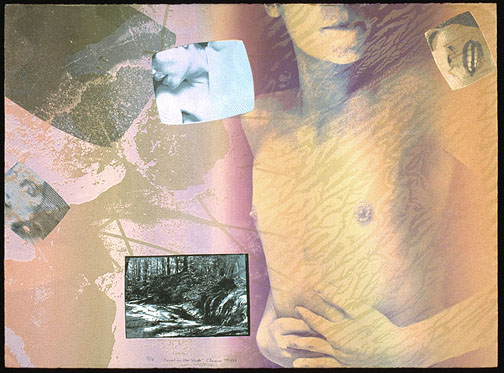
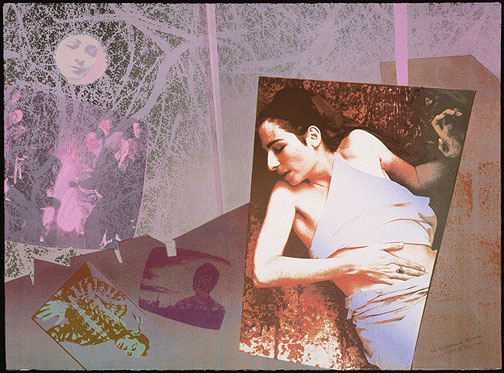
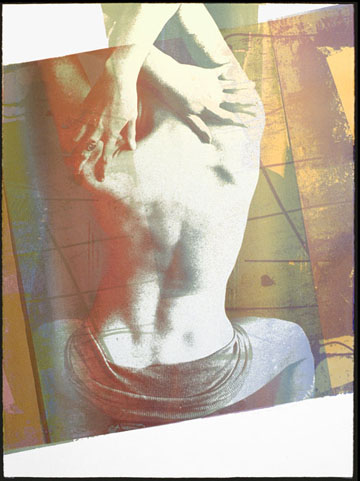
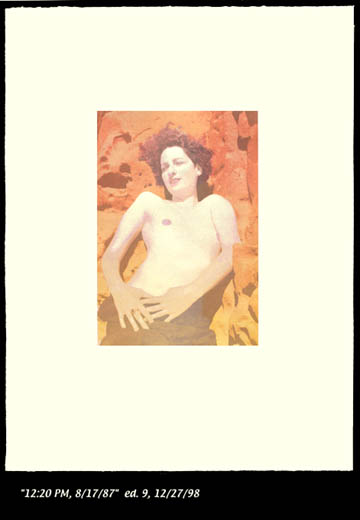
Click on any to see a larger image; these are all from the early to mid 1980s. No. 7 in the row is a diptych executed on 2 sheets, each 22" x 30", simultaneously (for those who care about technical information, there were 153 layers of color). I wished the viewer to find a story among the images, lingering here, passing swiftly there; this was the furious work of a younger artist, burning the energy of the late 20s to mid 30s. Editions were small, 5 to 8 or 9, as the medium was acrylic mural paint with transparent glazes, which can be screenprinted for a very short time before setting.
During this time I eventually realized that the fashion of appropriated imagery, which I used once in a while, might cause associations outside the present image, when my intent was to still the mind as it constructed the story - so the following are entirely composed of images I made:
|
|
2 prints remain |
|
2 prints remain |
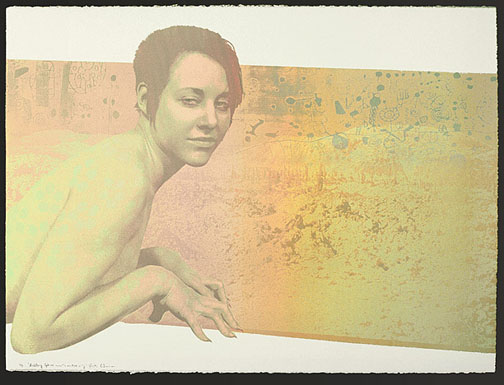
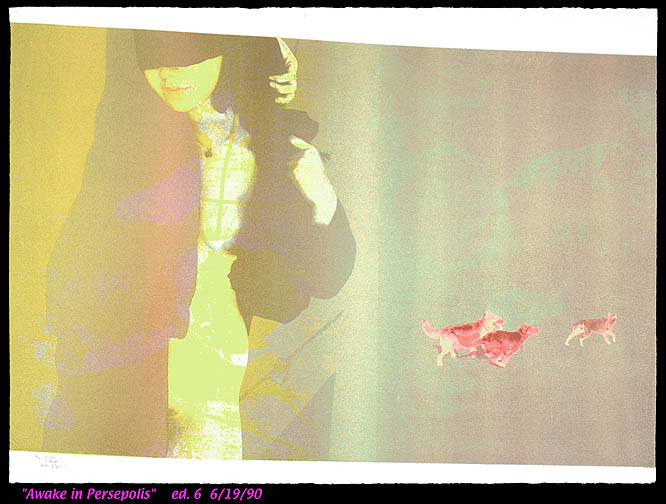
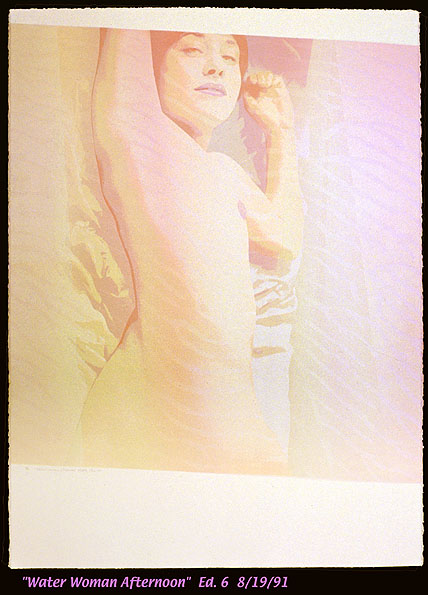
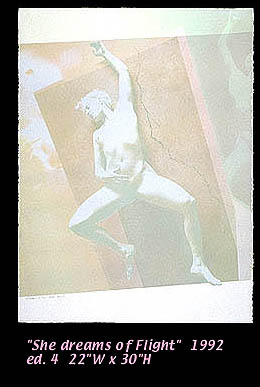
These above are from the late 80s into 1992 or so, all are single sheets 30" wide x 22" high, in 26 to 45 color layers. The female body is a thing I see as lovely. Finding beauty where it might not be obvious, became more the aim into the early 90s. Beauty should not stay still, it should seethe.
|
3 prints remain |
|
2 prints remain |
|
|
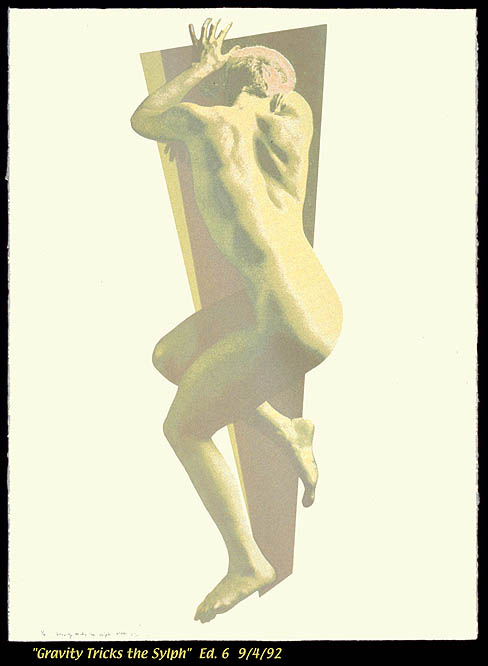
These are all (except No.5, which is an odd sized sheet) single sheets 22" wide x 30" high, also in 26 to 45 color layers. They range from 1986 to 1992. I'd become yet more interested in the space carried around a form, having looked at a good deal of Egon Schiele's work. Also, the idea of light existing independent of dark took hold of me. The third from the left was a problematic print for reproduction, as it has a reflective undercoat pattern (tiger stripes shine across her hips)..
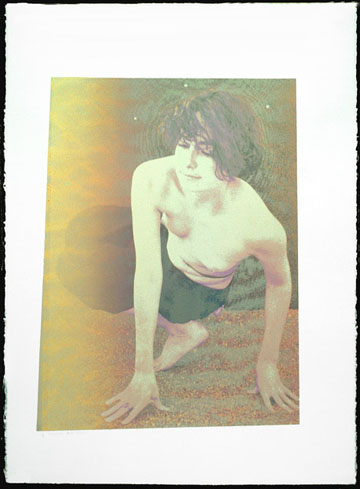
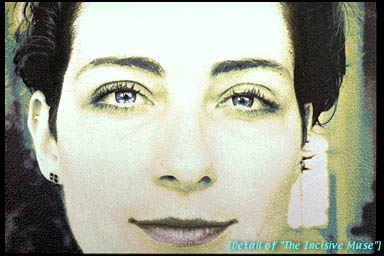
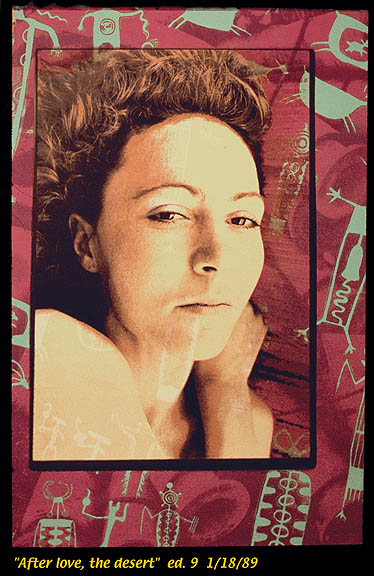
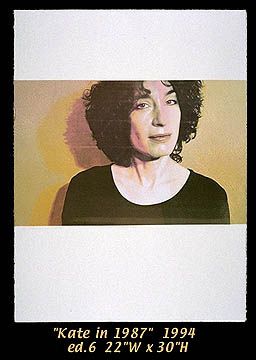
And finally, some portraiture, an interest in showing something about the person, up close. The are women I once knew, one was an inquisitive person with marble white skin, one had been a busker in the Paris subway:
 |
|
 |
In 1998 I tore ligaments from the bones in both wrists in a cycling mishap.
Technology has now caught up and I have resumed making original prints. What follows are some intermediate steps, a series of small works no more than 12 inches wide - the size the printer I could afford was able to print. Now, with the large printer, sizes up to 40 x 60 inches are possible.
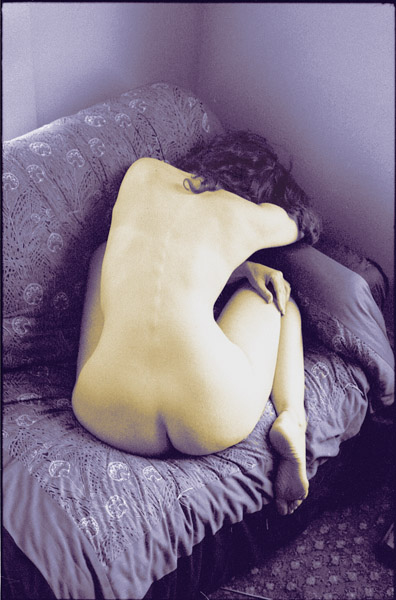
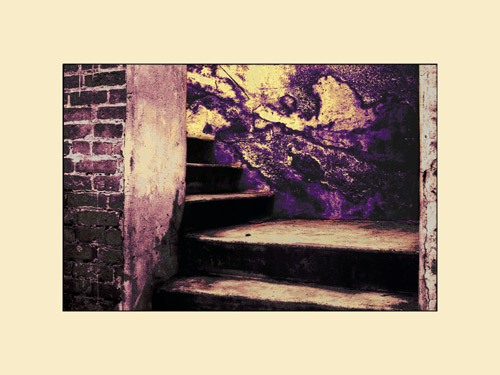
Single frame photos, with minimal adjustments except that these three are from black and white 35 mm negatives made between 1982 and 2002:
 |
 |
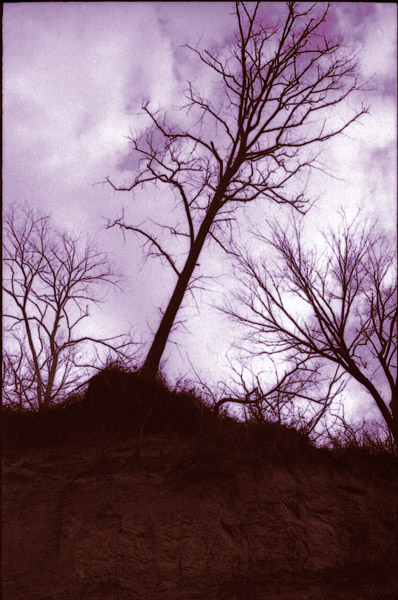 |
When one stops and pays attention, the most remarkable things are happening:
 |
 |
 |
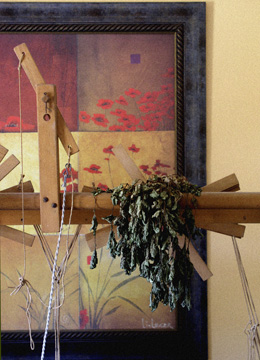
The left image is something I noticed in a mirror, machineries of decoration, the manufactured, the primitive and the dead - imagine a ratcheting sound just beyond the range of normal hearing; an unsuspected machine of crude manufacture is at work in the room with you, in this instance of artificial realism.
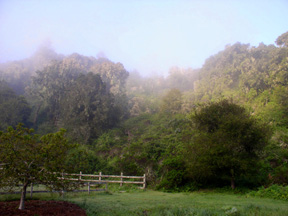
In the center we have what appears to be a miniature landscape, as for model trains, but it's actually huge, made out in the back field, the frame changes our perception of scale; perhaps, given the light fog that morning, a model view of the Mesozoic Era.
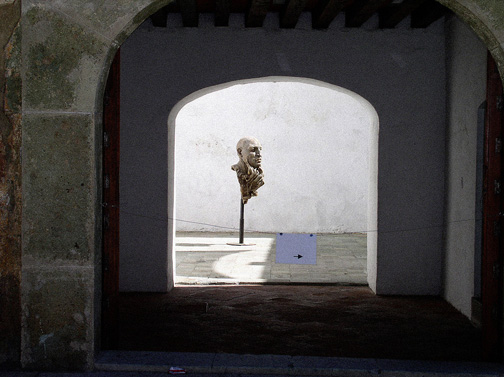
On the right, well, we'd call this The Founder - a series of porticoes giving onto a hidden patio, we see something casting a shadow, and onto what - some stilled vaporous eruption that's formed itself into the image of some august and stern Presence (sculpted by Javier Marin around 2005, the portico is at the Museum of Contemporary Art in Oaxaca, Mexico).
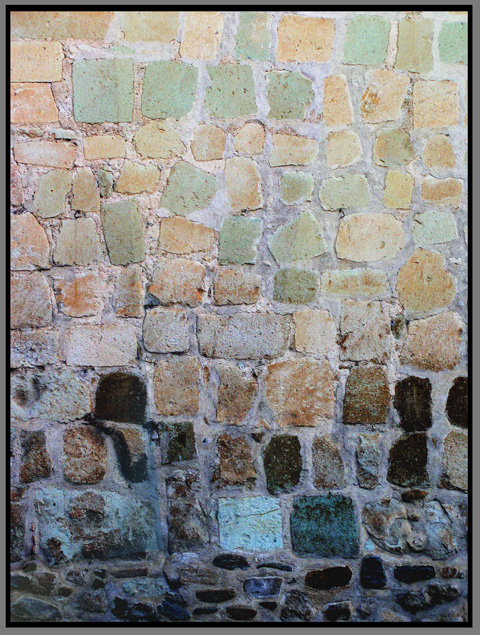
A couple more, below. On the left, something simple, but if you gaze you'll notice something odd about the space and shading, especially toward the bottom, perspective becomes a little uncertain. This is to the purpose.
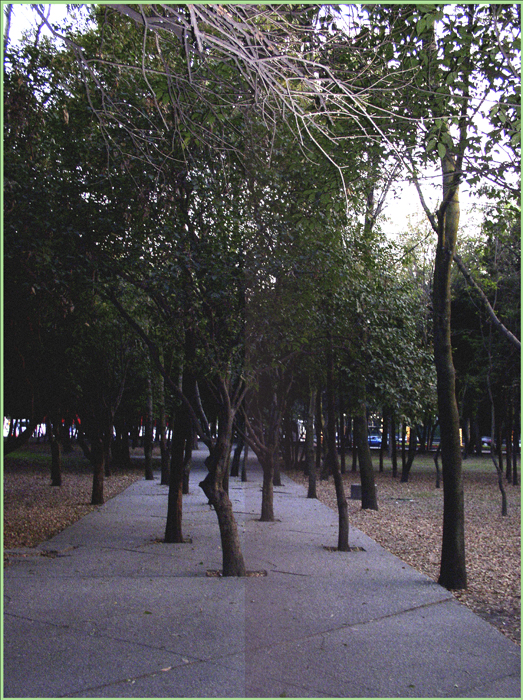
On the right, a spot in Mexico City where there appear to have been differing plans for the arborists and the concrete workers, my task being to bring you the strangeness of being confronted with such a thing.
 |
 |
As with all the images on this page, click on a thumbnail to see a larger image.